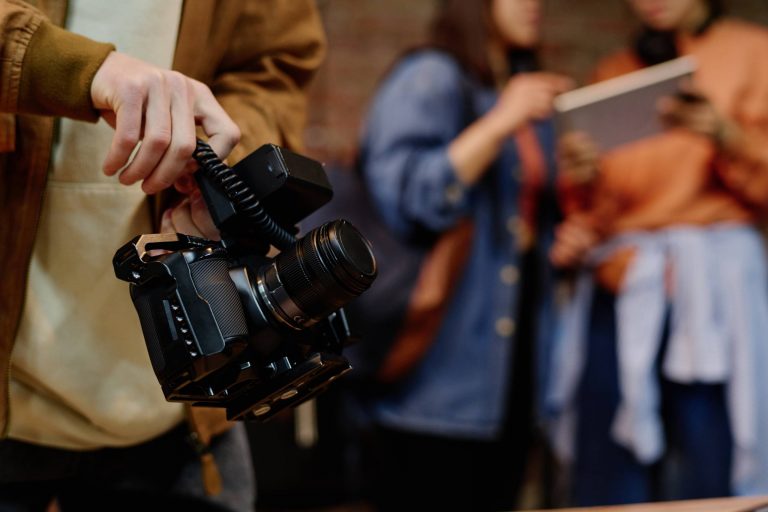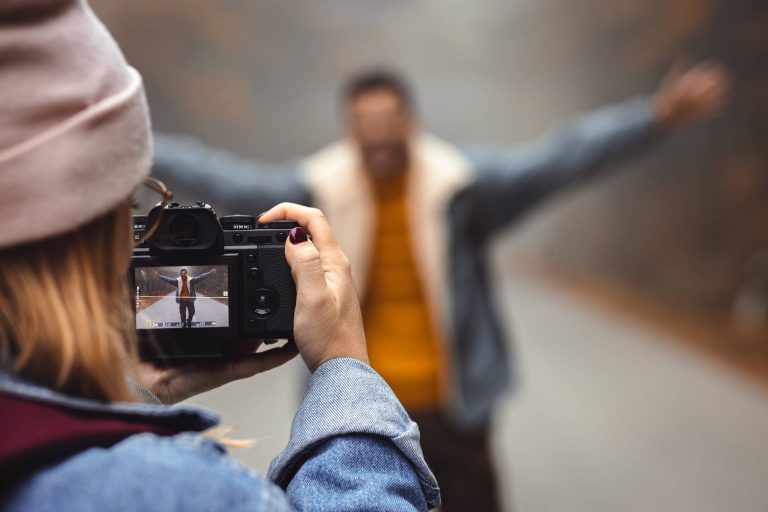
When you press the shutter button on a roll of film and know that you are done with it, you enter one of the unique joys of shooting film: the anticipation and the waiting time. There is no histogram, no chimping on the back screen, no culling out the bad photos from the good. You walk away with a metal or plastic cassette and inside are all your photos, sequestered away in the darkness, suspended in chemicals, waiting to be processed. You don’t know what you have until you see the photos developed. The distance from the photos that you have taken allows you to be excited and then remember more of what you did when you were shooting.
It may be days or weeks before the negatives come out of the fixer, soggy, shiny in the light of the darkroom. There’s a certain ritual to the first inspection of the contact sheet – poring over the little inverted images on the paper, looking for the keepers that somehow worked on the long journey from brain to film. Even with the best photographers there are usually a few surprises. Often something done on a lark, something half-assed, will shine with an unexpected beauty, while an image I knew I’d nailed may turn out to be a dud. That’s not a bad thing, just the way it is – a reminder that photography, even now, remains an act of faith.
And when you print, the lag becomes even more pronounced. You must examine each test strip and each sheet that comes off the enlarger under a safelight before you can expose another piece of expensive paper. You watch as the print develops in the tray, the shadows coming up first, the highlights taking a bit longer, and the entire photograph eventually filling in like a dream unfolding. Every change, whether it be more time in the developer, some dodging, or a carefully targeted burn, takes time and several tries. There’s no going back from a misplaced thumb print or a slight overdevelopment, and the end result feels all the more rewarding because of it. You can feel the lag in every print.
Similarly, if you’re the type of film photographer who develops their photos at a lab, the act is different but the same level of excitement and ceremony applies: you get your photos in the post or the scans to your email address, and you still get that tingle, that moment of opening them and scrolling through. Similarly, I’m sure many photographers scan their own negatives and don’t necessarily rip through all the photos; we only have 12/24 photos to begin with, so they’re never going to appear as redundant as they might on a camera roll of 50 identical frames.
Lastly, waiting for film to be processed is not an interval but an act of creation itself. It allows for contemplation. For photographs to incubate in the mind before they’re viewed. It allows the photographer to remember why they took each photograph in the first place. It heightens the value of photographs that are successful. They are felt more deeply. More real. And in a world in which speed and efficiency are valued above nearly all other things, waiting for the results of film photography is one of the most subversive and gratifying things a photographer can do.